Korean Japchae Recipe

This authentic Japchae recipe is the best Korean glass noodle stir-fry youโ€™ll ever makeโ€”savory, sweet, and bursting with flavor in every bite! ย From details and techniques like marinating and caramelizing the mushrooms, to searing the beef for buttery tenderness, every step has been expertly tested and perfected to create restaurant-quality Japchae at home.ย  Follow along for the ultimate guide to foolproof results, complete with step-by-step photos and expert tips!

Watch How to Make Japchae
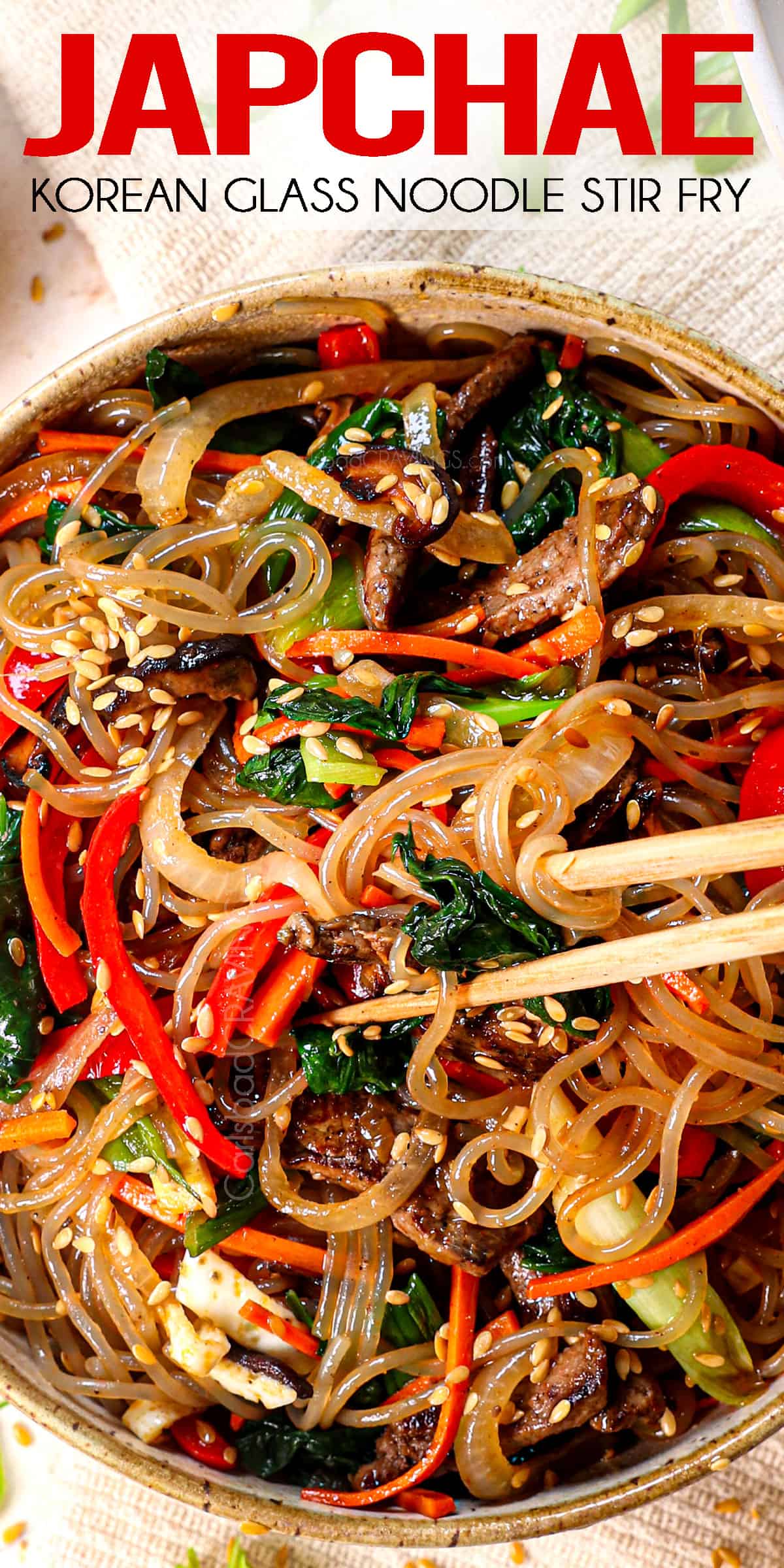
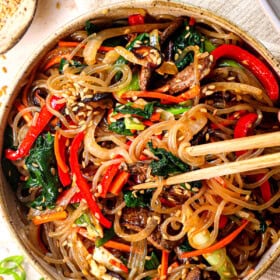
top view of Japchae in a bowl being eating with chopsticks


ย 
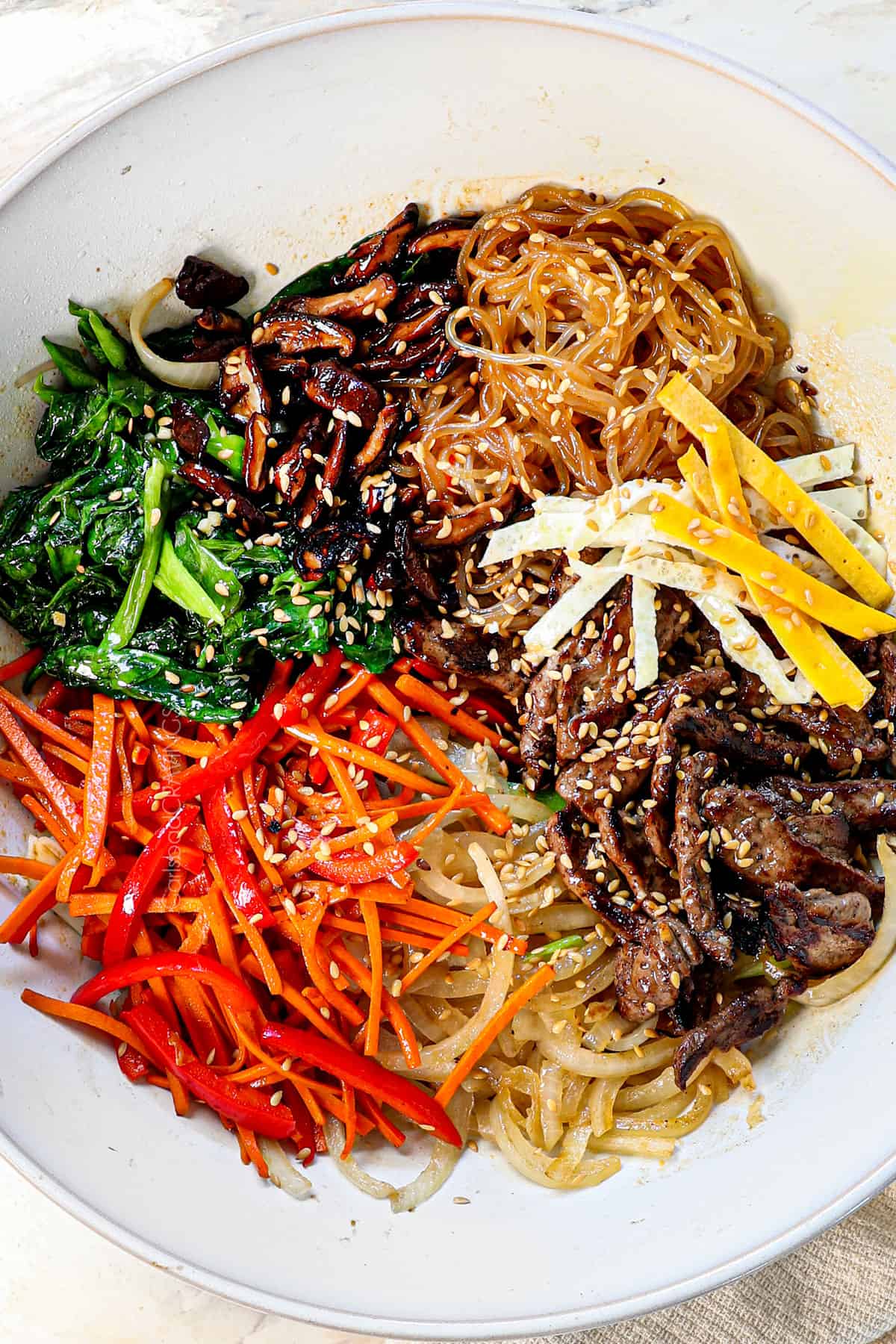
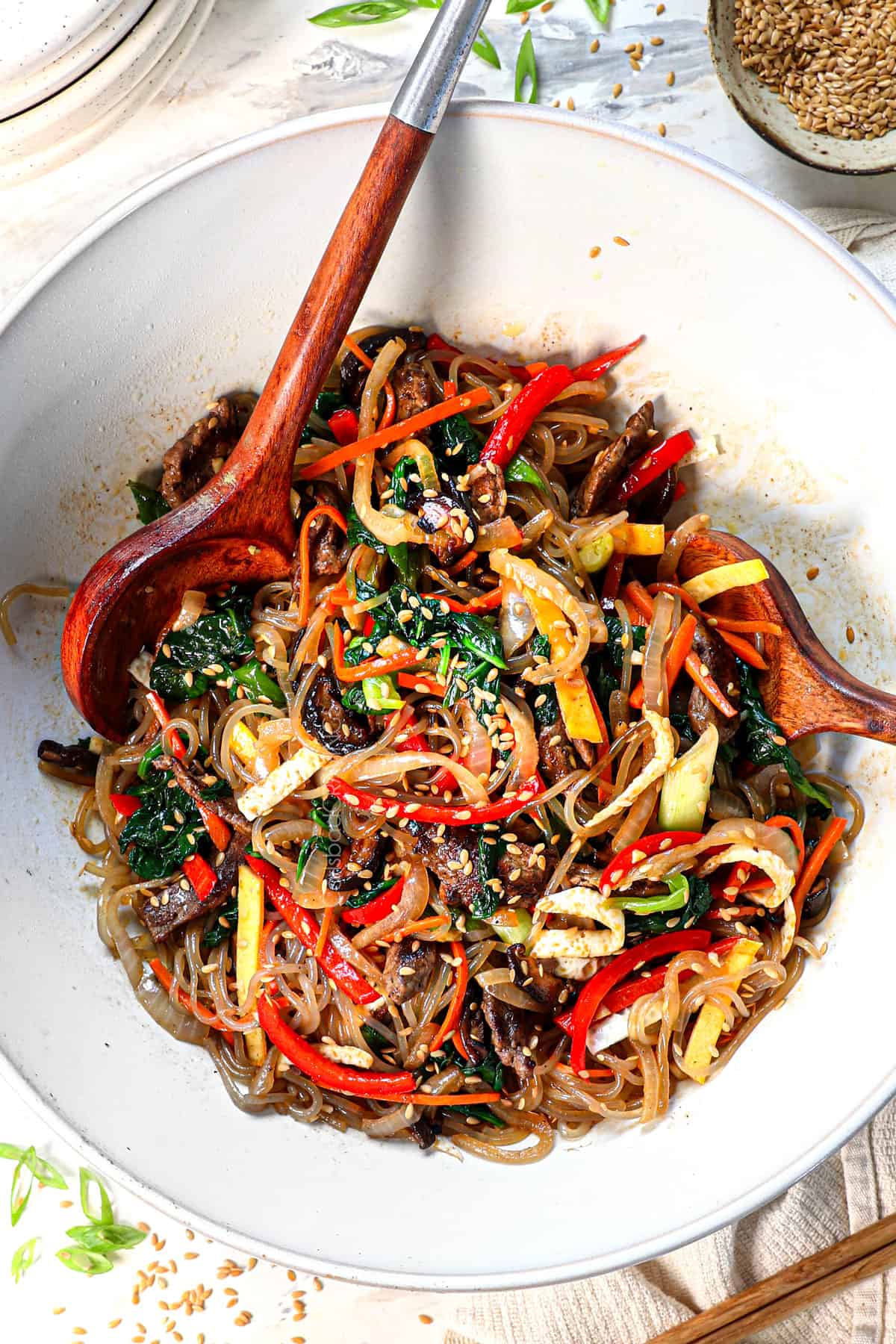
top view of Japchae ingredients in a bowl after being cooked: glass noodles, beef strips, red bell pepper, carrots, onions, shiitake mushrooms and spinach

Why Youโ€™ll Love This Japchae Recipe

I love Korean food, from Beef Bulgogi to Korean Chicken, but Japchae might be my favorite yet! I was inspired to make it while watching my latest favorite Korean Drama, Crash Course in Romance, where it is mentioned several times. After extensive research and recipe testing, I am happy to say this recipe aces it! ย Itโ€™s a crash course in Korean cuisine at its finest.ย  Hereโ€™s why youโ€™ll love it and what makes it next level:
  • Balanced, bold sauce โ€“ after seeing hundreds of reviews say Japchae sauces taste flat, I upgraded it with gochujang for heat and rice vinegar for brightness, because every sauce needs acid + heat for real dimension.
  • Flavor-packed noodles โ€“ tossed in the sauce first while the vegetables cook so they absorb every drop of savory, sweet, and spicy goodness. This also prevents them from sticking together.
  • Buttery tender beef โ€“ seared on each side just until cooked through for even cooking and melt-in-your-mouth texture, instead of stirring.
  • Perfectly caramelized mushrooms โ€“ marinated first, then seared on each side until golden and flavorful (no bland, squishy mushrooms here!).
  • Garlic sautรฉed spinach โ€“ cooked with garlic and salt until just wilted for 10X more flavor and a far better texture than the boiled versions.
  • Thoughtfully layered cooking โ€“ just like traditional Japchae (and bibimbap), every ingredient is cooked separately (besides the carrots and bell peppers) to preserve its color, enhance its flavor, and texture with its own precise cooking time, then brought together in one stunning, glossy dish.
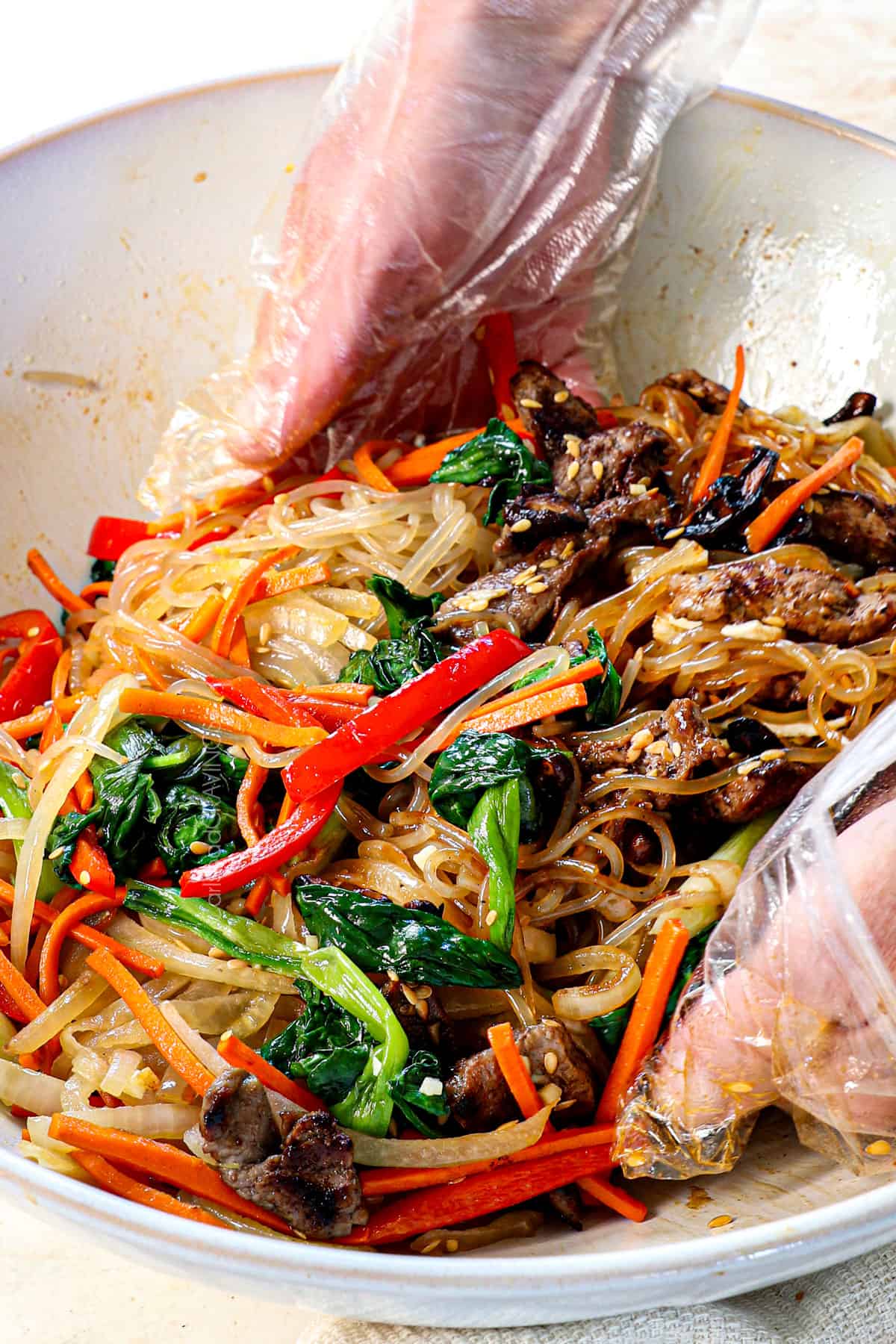
tossing Japchae recipe ingredients together with gloved hands
ingredient icon

Japchae Noodles Ingredients

Letโ€™s take a closer look at what you need to make this recipe (measurements in the printable recipe card at the bottom of the post):

Beef and MArinadeย 

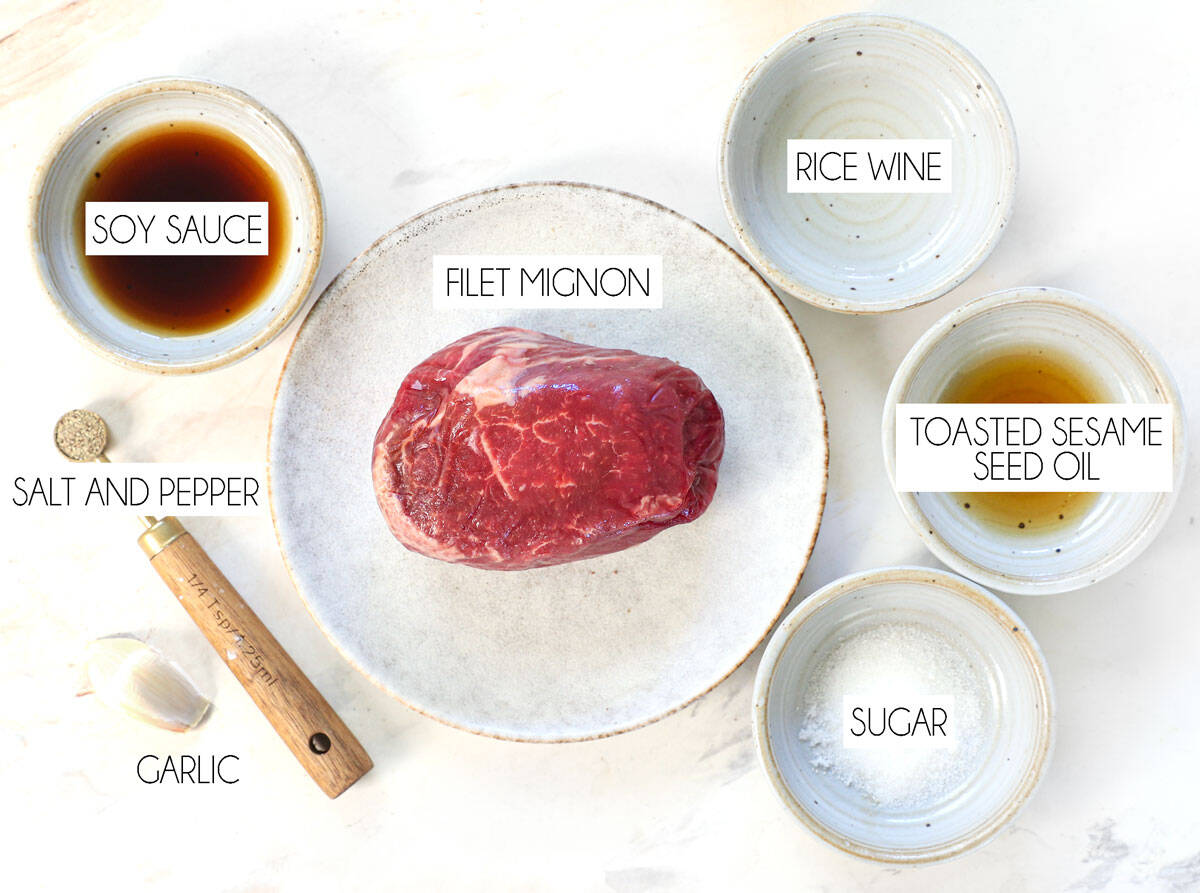
  • Beef: filet mignon or ribeye fillet are the gold standardโ€”both are naturally tender, buttery, and full of flavor, which means they donโ€™t need long marinating or heavy cooking to taste incredible. Filet mignon gives you that melt-in-your-mouth, delicate texture, while ribeye brings a little more marbling and rich beefinessโ€”either is perfect for quick searing in Japchae.
  • Marinade: Thinly slicing the beef allows the marinade of soy sauce, garlic, mirin, sugar, black pepper, and toasted sesame oil to penetrate quickly, seasoning the beef without overpowering its natural flavor.
  • Rice wine:ย Quick note on this one. I useย โ€œKikkoman Aji-Mirin: Sweet Cooking Rice Seasoningโ€ย which is commonly found in the Asian section of most grocery stores or you canย Amazon it.
  • The best substitute forย rice wineย is pale dry sherry. Do NOT substituteย rice wineย withย rice vinegar, they are NOT the same.ย Rice vinegarย will add an acidic bite without the sweetness.
top view of japchae ingredients for the beef marinade:  filet mignon, soy sauce, toasted sesame seed oil, rice wine, sugar, salt, and garlic

Noodles and vegetables

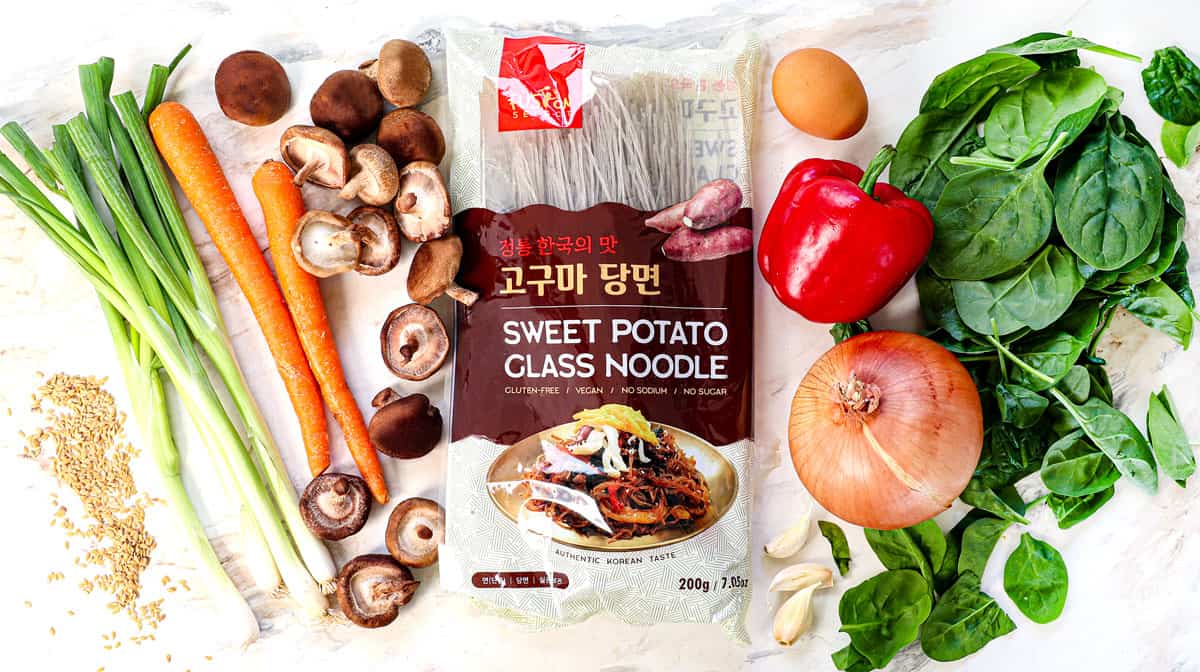
  • Korean sweet potato noodles, also called dangmyeon, are chewy, translucent noodles made from sweet potato starch. Look for long, thin noodles that turn glossy and springy when cooked. If youโ€™re unsure if you have the right noodle, check the label โ€“ it should say sweet potatoes! They can usually be found in Asian grocery stores, the international aisle of larger supermarkets, or AMAZON HERE.
  • Fresh shiitake mushrooms: Remove shiitake stems because they are tough and woody, making them unpleasant to eat, and avoid washing the caps with water since mushrooms absorb moisture, which can make them soggy and prevent proper caramelization.
  • Egg: The egg white and yolk will be separated and cooked separately. Itโ€™s easy to separate while the egg is cold.
  • Yellow onion: The best way to slice an onion is to cut off the ends, peel the skin, then slice from top to root into even, thin pieces, keeping the root intact so the layers to hold together while chopping.
  • Green onions: Youโ€™ll need three green onions for this recipe, which means three onion roots and all the stems that come with each.
  • Carrots: To julienne a carrot into batons, slice it lengthwise into thin, even planks, stacking them and cutting again lengthwise into matchstick-sized sticks. You may need to cut the carrots into shorter pieces before cutting lengthwise.
  • Red bell pepper: Julienne to match carrot size.
  • Spinach: Use baby spinach because the leaves are tender, mild, and cook quickly without becoming bitter or tough. I just grab a 5-ounce bag. Remove the thicker stems if desired.
  • Garlic cloves: Minced finely by hand or I use my favorite garlic press. ingredients.
top view of japchae ingredients for the stir fry portion showing what sweet potato noodles look like, along with yellow onion, green onions, carrots, red bell pepper, spinach, garlic, and shiitake mushrooms

the sauce (โ€œNoodle Marinadeโ€)

  • Soy sauce: Provides savory, umami depth while keeping the saltiness in check. Take care to use reduced sodium so the dish isnโ€™t too salty.
  • Toasted sesame seed oil: Use toasted, not plainโ€”this is what gives Japchae its nutty, aromatic richness and authentic flavor.
  • Honey: Brings natural sweetness with subtle nuances to balance the savory and spicy notes.
  • Brown sugar: Contributes caramel-like depth and a hint of molasses flavor.
  • Rice vinegar: Brightens the sauce with a touch of acidity for balance. Take care to use unseasoned. If you donโ€™t keep it stocked, you may substitute with white vinegar.
  • Gochujang: A spicy red miso chili paste with a distinct umami heat and a touch of sweetness. Do NOT substitute with any other chili paste. You can purchase it at any grocery store or on Amazon HERE.
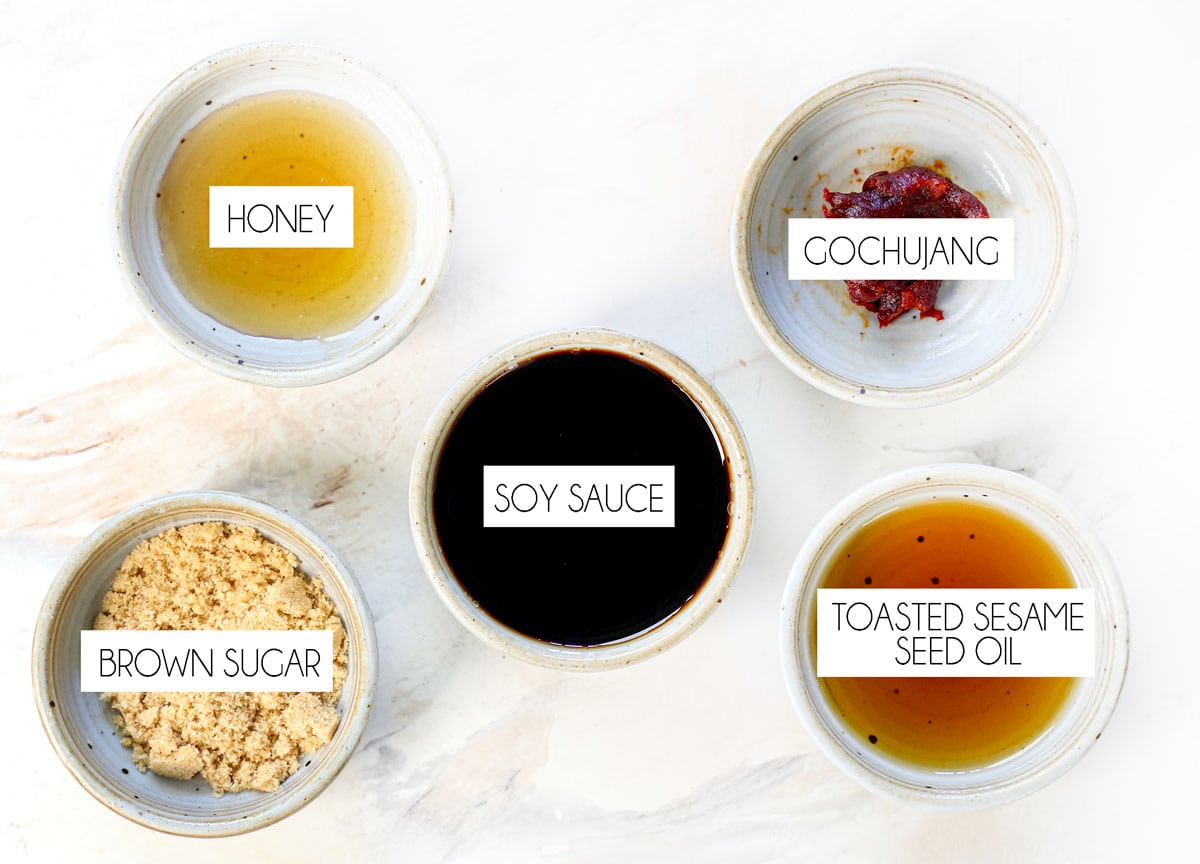
top view of japchae ingredients for the sauce: soy sauce, brown sugar, honey, toasted sesame seed oil

How to Make Korean Japchae Recipe

Letโ€™s take a closer look at how to make this recipe with step-by-step photos (full recipe in the printable recipe card at the bottom of the post):
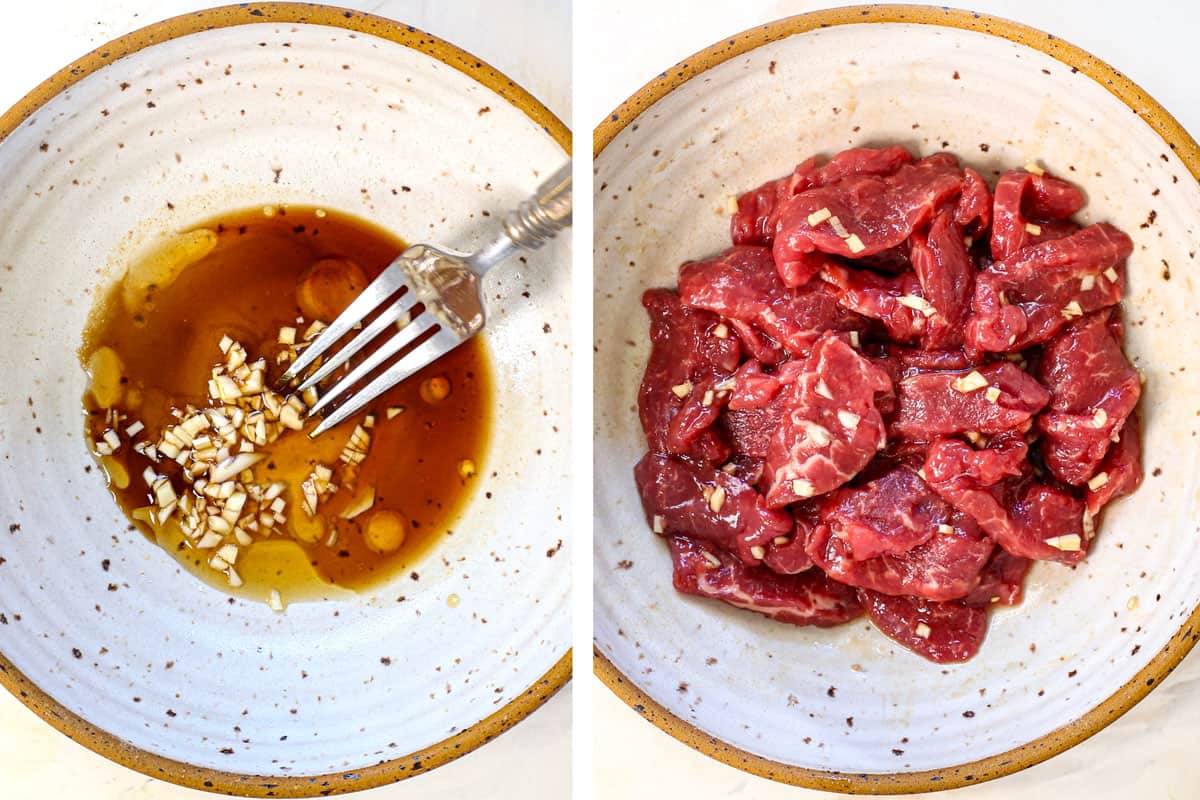
  • Step 1: Marinate the Beef.ย Whisk the Beef Marinade ingredients together in a medium bowl. Stir in the beef and set aside until ready to use.
a collage showing how to make japchae by whisking the beef marinade ingredients together, then stirring in the beef
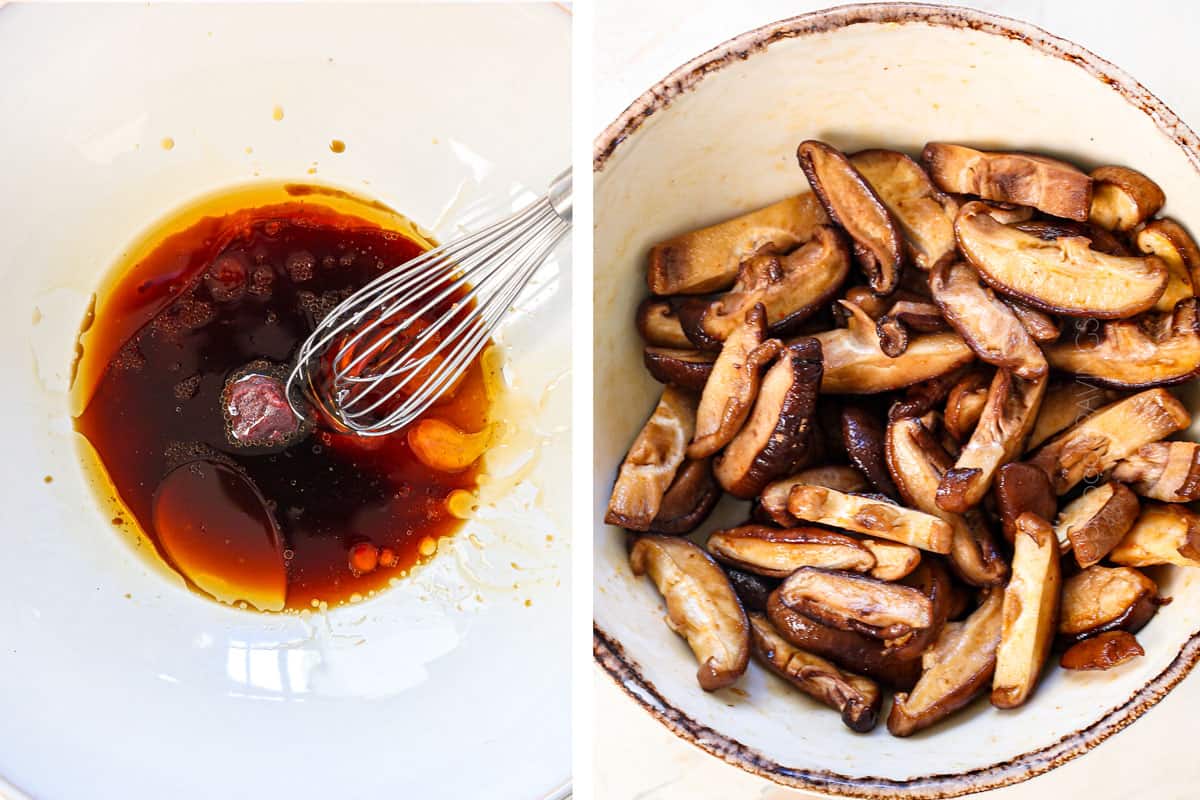
  • Step 2: Marinate the Mushrooms.ย Whisk the Noodle Marinade ingredients together in a very large bowl โ€” large enough to toss the entire dish later. Transfer one tablespoon of this marinade to a small bowl and stir in the sliced mushrooms.
showing how to make japchae by whisking the sauce ingredients in a large bowl, then adding some of the marinade to a bowl of shiitake mushrooms
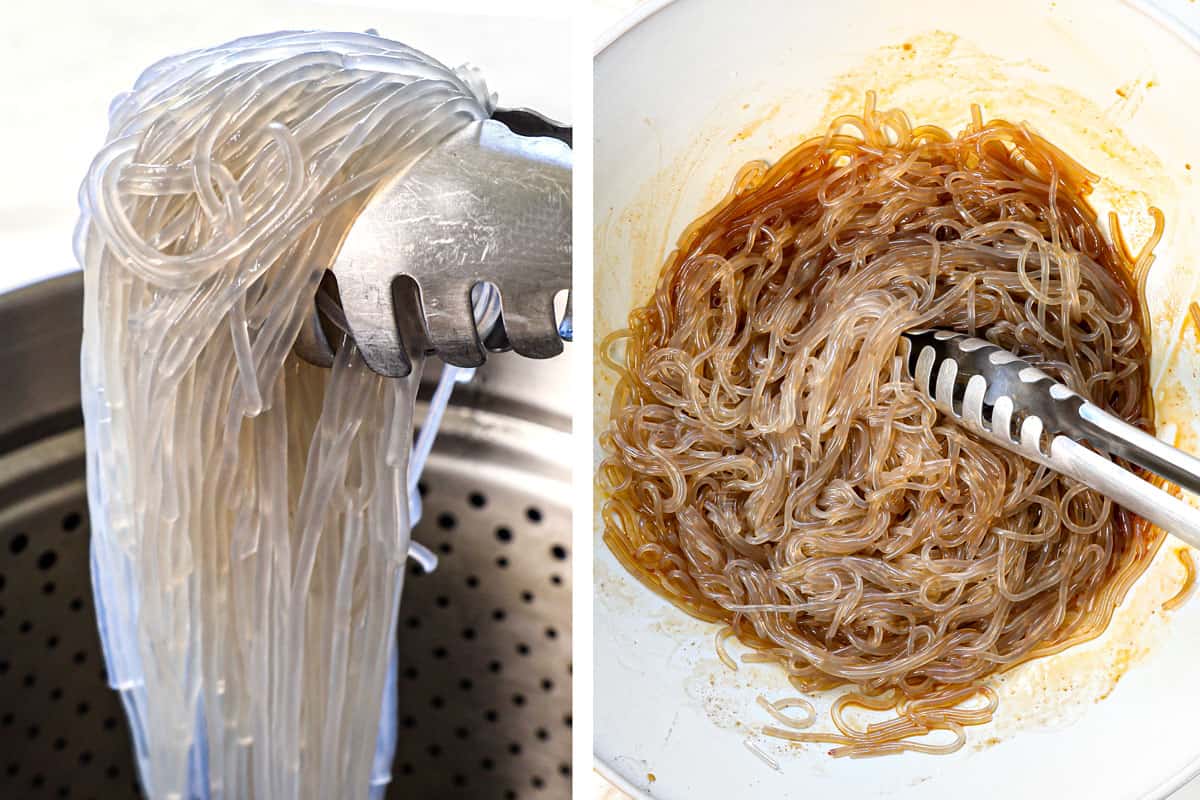
  • Step 3: Boil the Noodles. Add the noodles to boiling water and cook for 5-7 minutes until they are soft, chewy, and slightly springyโ€”not mushy. Drain, then rinse in cold water to stop the cooking process. Cut the noodles with kitchen shears into 6-8-inch lengths. Transfer the noodles to the Noodle Marinade and toss to coat.ย 
a collage showing how to make japchae cooking the sweet potato noodles until translucent, then holding up with tongs to show the color and texture, then adding to the sauce and tossing with tongs to combine
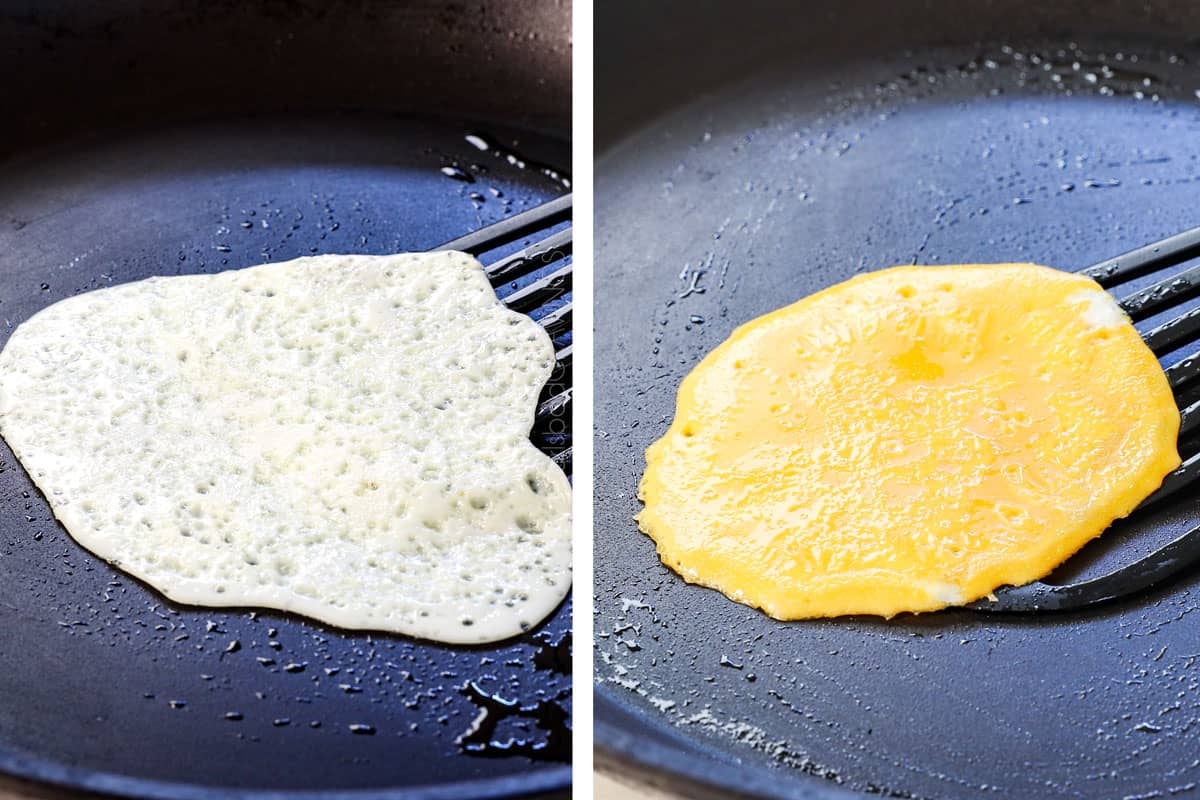
  • Step 4: Cook the Egg Separately.ย In a small bowl, beat the egg white with a fork. Heat 1 teaspoon of cooking oil in a large non-stick pan over medium-low heat, using a brush to spread it evenly. Pour in the egg white and cook until set, about 1-2 minutes. Transfer to a cutting board.ย  Repeat the process with the Egg Yolk.ย 
a collage showing how to make japchae by cooking the egg white, then cooking the egg yolk in a nonstick pan
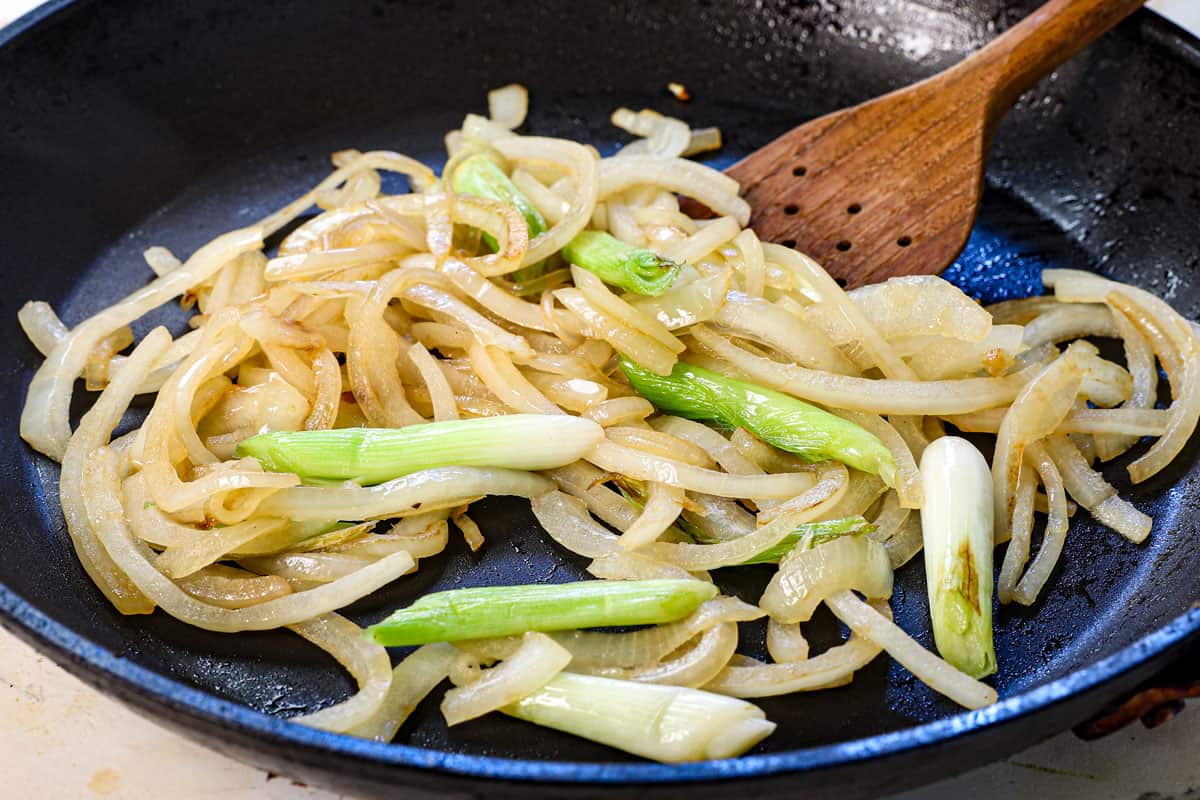
  • Step 5: Cook the Onions:ย Cook the sliced onion, white parts of the green onions, and sea salt for 2-3 minutes, just until they begin to soften. Transfer the onions to the Noodle Bowl, but do not mix them in.ย We will add all the vegetables on top of the noodles, but only mix them in at the very end.
showing how to make japchae cooking the sliced onion and the white parts of the green onions
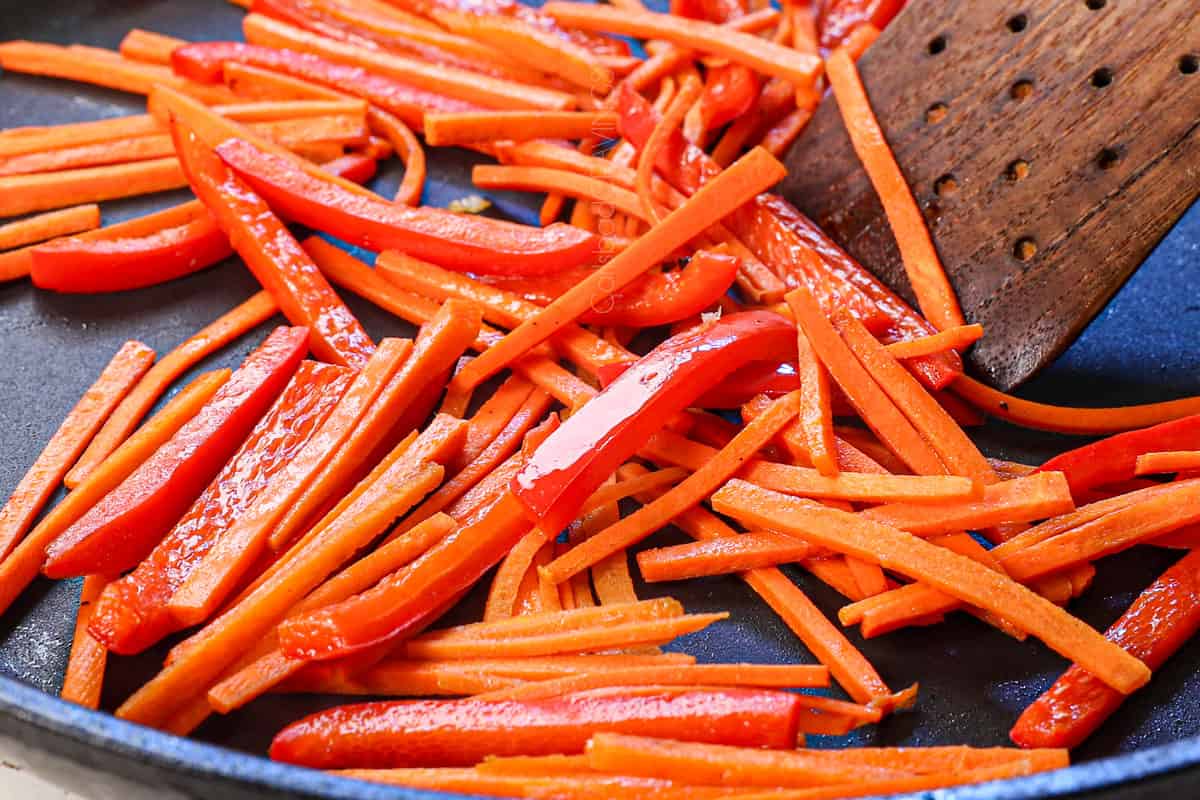
  • Step 6: Cook the Carrot and Bell Pepper. Add the carrot and bell pepper with sea salt and cook for 1 to 1 ยฝ minutes, until just starting to soften. Transfer to the Noodle Bowl, but donโ€™t mix in.
showing how to make japchae cooking the bell peppers and carrots together
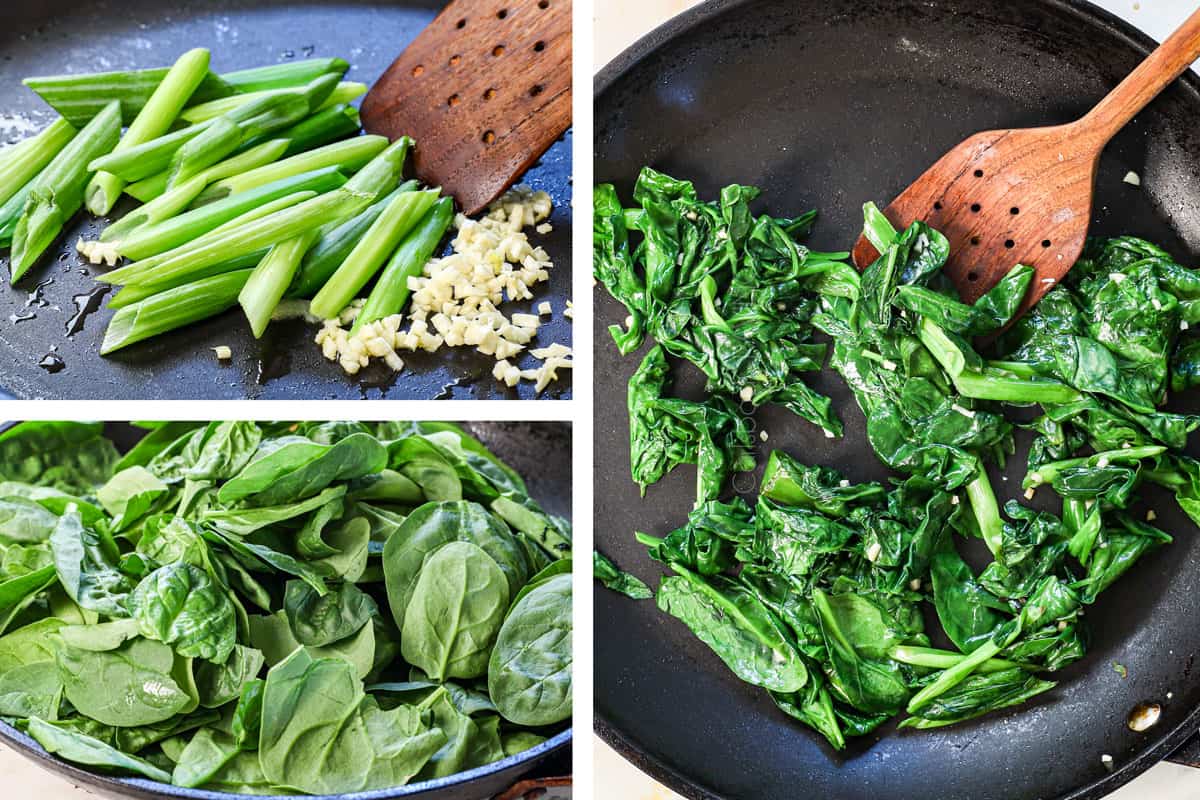
  • Step 7: Cook the Spinach.ย Sautรฉ the green onions and 2 cloves of minced garlic for 30 seconds. Add the spinach, season with sea salt, and stir until just wilted, about 2โ€“3 minutes. Transfer to the Noodle Bowl, but donโ€™t mix it in.
a collage showing how to make japchae by sauteing the green onions and garlic, then adding the spinach and cooking until wilted
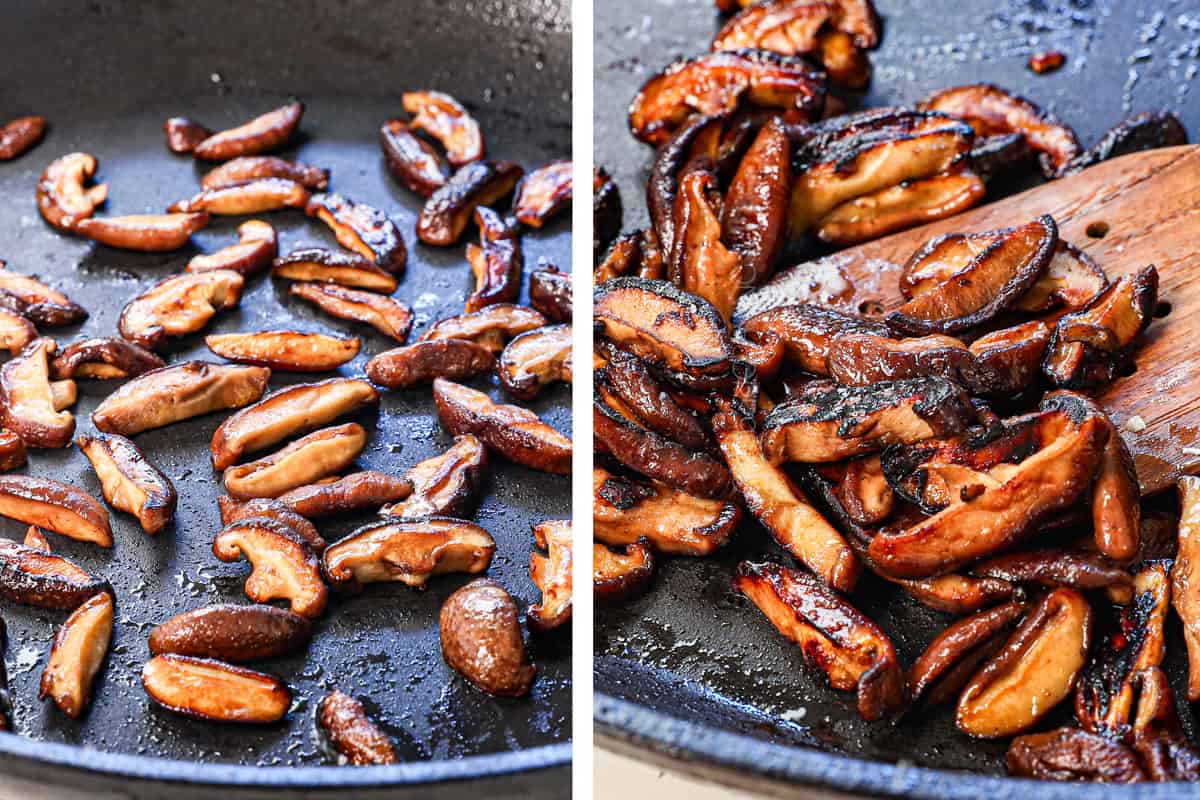
  • Step 8: Cook the Mushrooms.ย Add the mushrooms, spreading them evenly. Cook for about 1 minute per side, or until caramelized. Transfer to the Noodle Bowl, but do not mix in.
a collage showing how to make japchae by cooking the mushrooms on each side until deeply caramelized
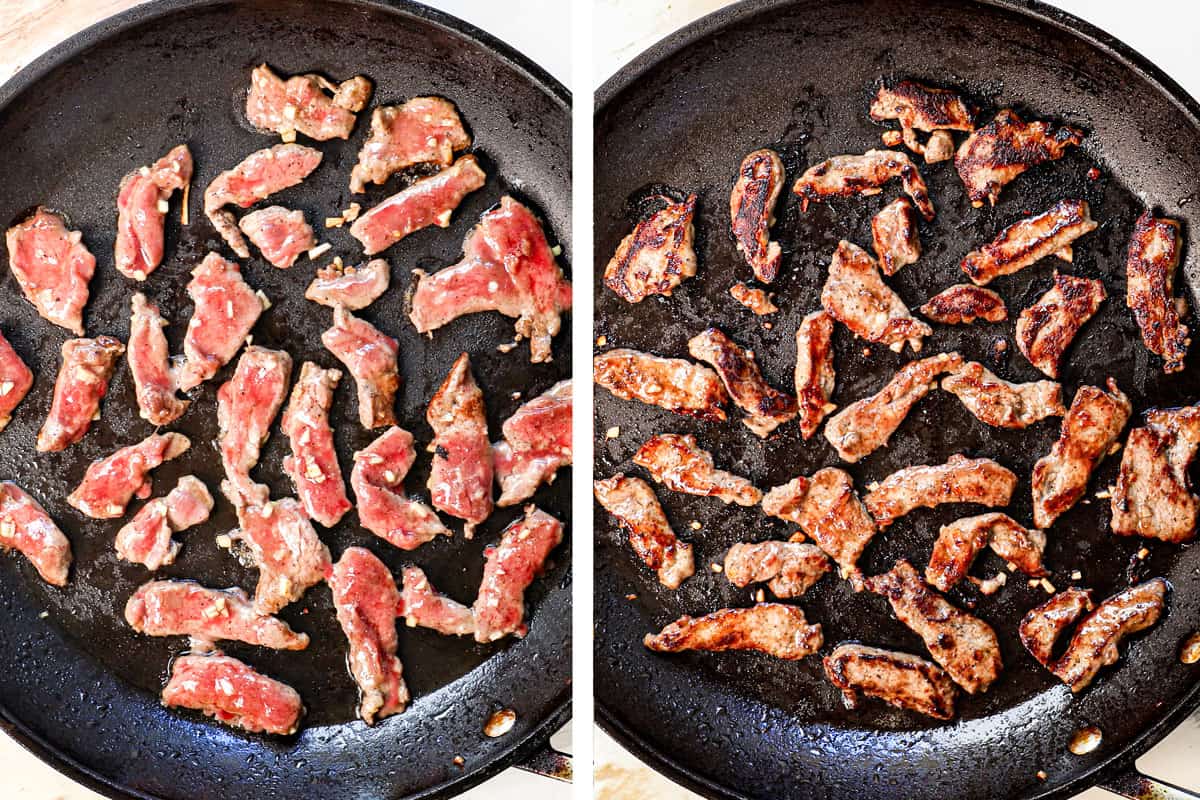
  • Step 9: Cook the Beef:ย Add the beef to the sizzling oil in a single layer and cook for about 45 seconds per side, or just until it is cooked through. Transfer to the Noodle Bowl, but donโ€™t mix it in.
a collage showing how to make japchae by searing the beef in a single layer on each side
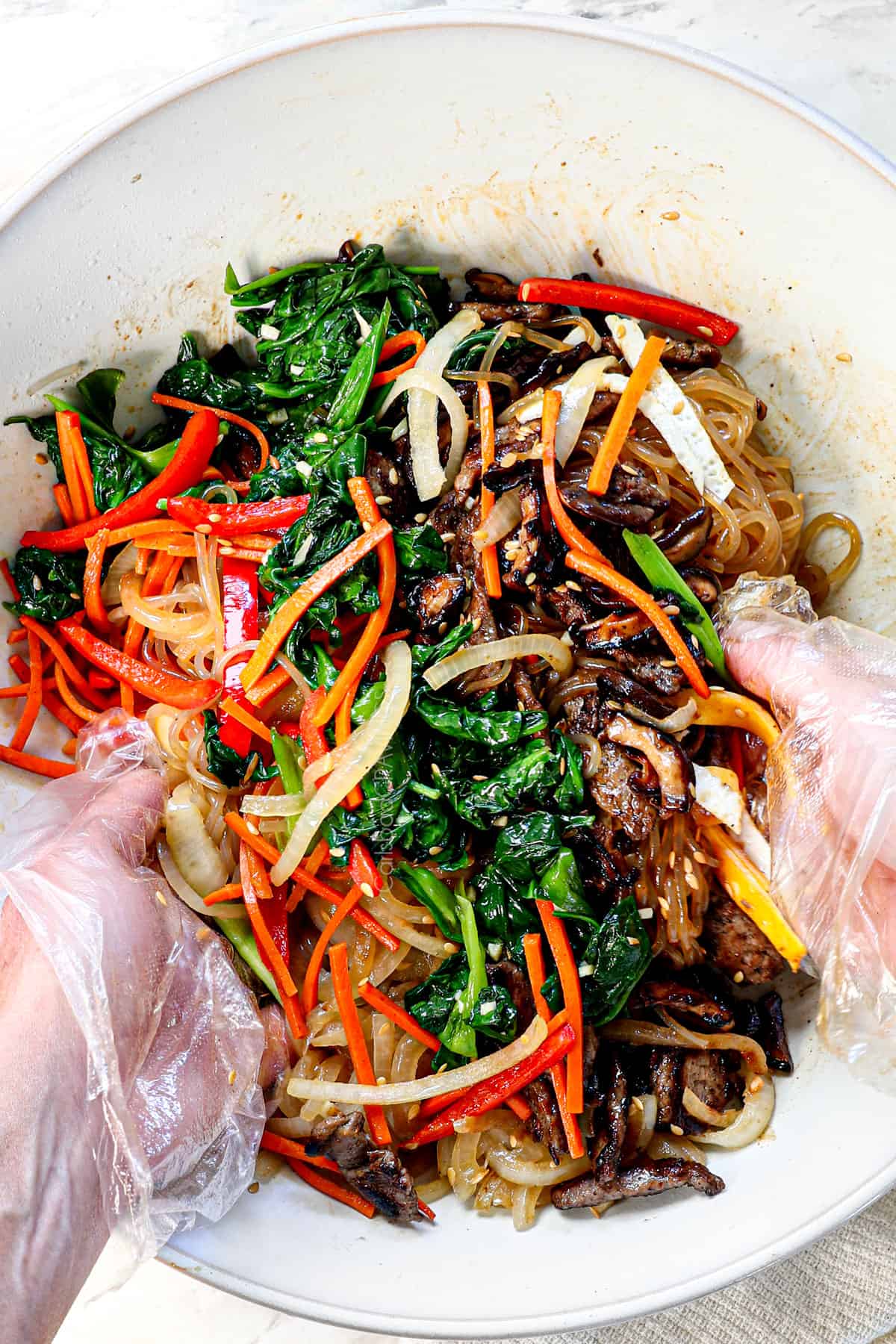
  • Step 10: Final Touches:ย Slice the egg white and egg yolk into matchsticks. ย Add them to the Noodle Bowl along with toasted sesame seeds. ย 
showing how to make Japchae by tossing the ingredients together with gloved hands
  • Step 11: Toss and Serve: Traditionally, Japchae is often tossed together by hand, usually wearing plastic gloves. This gentle mixing helps evenly distribute the ingredients without breaking the noodles.
showing how to make Japchae by garnishing with sesame seeds

japchae recipe TIPS

  • Slice beef easily: Partially freeze the beef for about 60 minutes to firm it up; it thaws quickly once sliced.
  • Check noodle doneness: Donโ€™t overcookโ€”rinse one noodle in cold water and taste to ensure itโ€™s chewy yet tender.
  • Distribute oil evenly: For just a teaspoon or drizzle, use a pastry brush to spread the oil across the pan.
  • Cook vegetables just right: They should be crisp-tender, not tender-crisp. Err on the side of undercooking.
  • Sear beef perfectly: Heat the pan until piping hot before adding beef to create a beautiful searโ€”color = flavor.
  • Adjust to taste: Donโ€™t be afraid to tweak the sauce; add extra gochujang or rice vinegar for heat and brightness.

Korean japchae variations

  • Different meats: Swap the beef for chicken, pork, shrimp, or tofu.
  • Vegetable swaps/additions: While I kept this recipe traditional, feel free to use any veggies you like such as zucchini, snow peas, or baby bok choy.
  • Spicy version: Add extra gochujang, red pepper flakes, or a drizzle of chili oil to give the dish a gentle or fiery kick.
  • Vegan/vegetarian option: Skip the beef and egg, and load up on mushrooms, tofu, and a touch more sesame oil for richness
  • Noodle swaps: While sweet potato noodles are traditional, you can experiment with shirataki or glass noodles if needed.
  • Make it gluten free: Use tamari or gluten-free soy sauce instead of regular soy sauce, check gochujang labelsโ€”some brands contain wheat, so opt for a gluten-free version and always confirm other sauces and seasonings (like mirin or vinegar) are gluten-free.
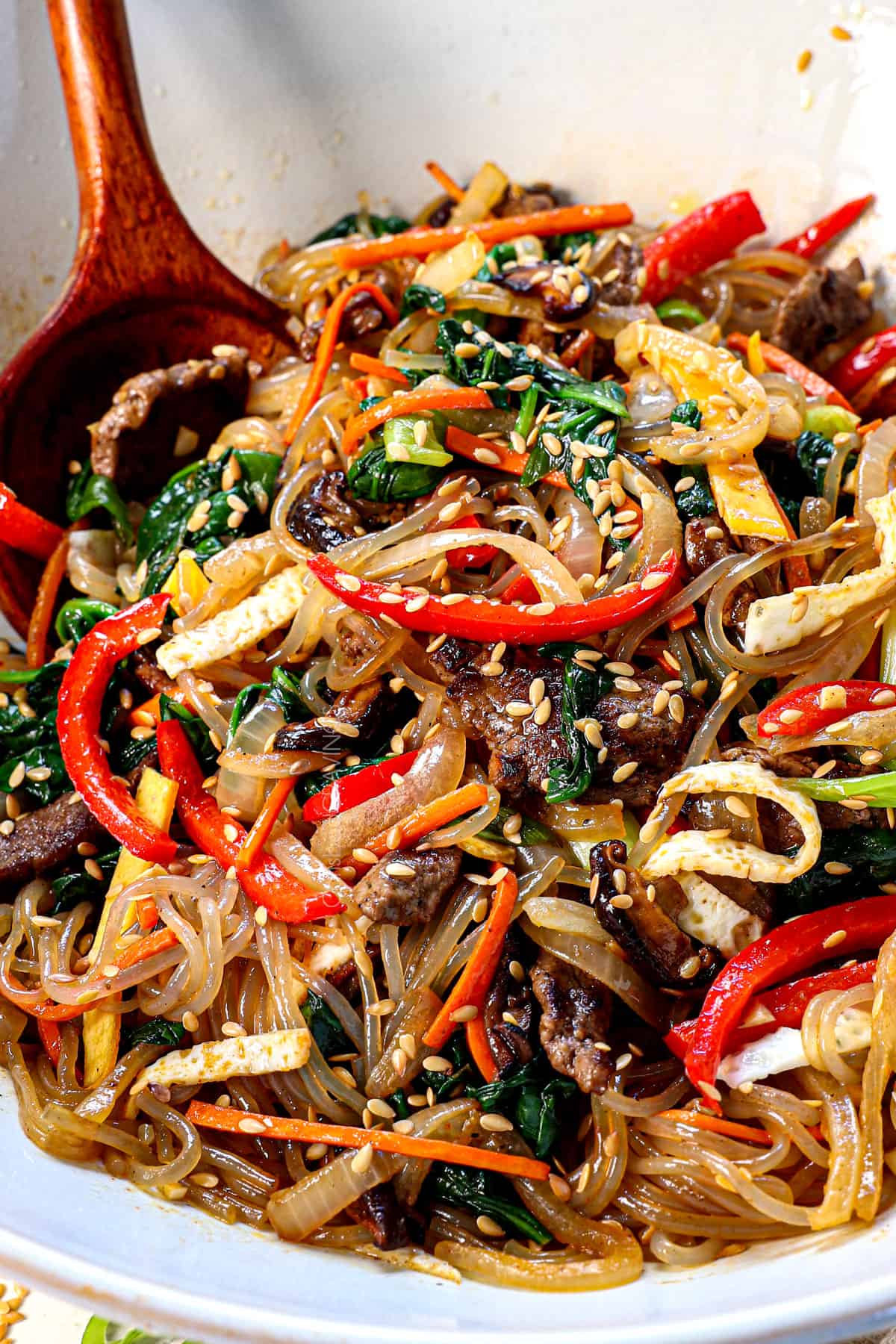
up close of best japchae recipe showing how colorful and vibrant the dish is

Serving Suggestions for Japchae Noodles
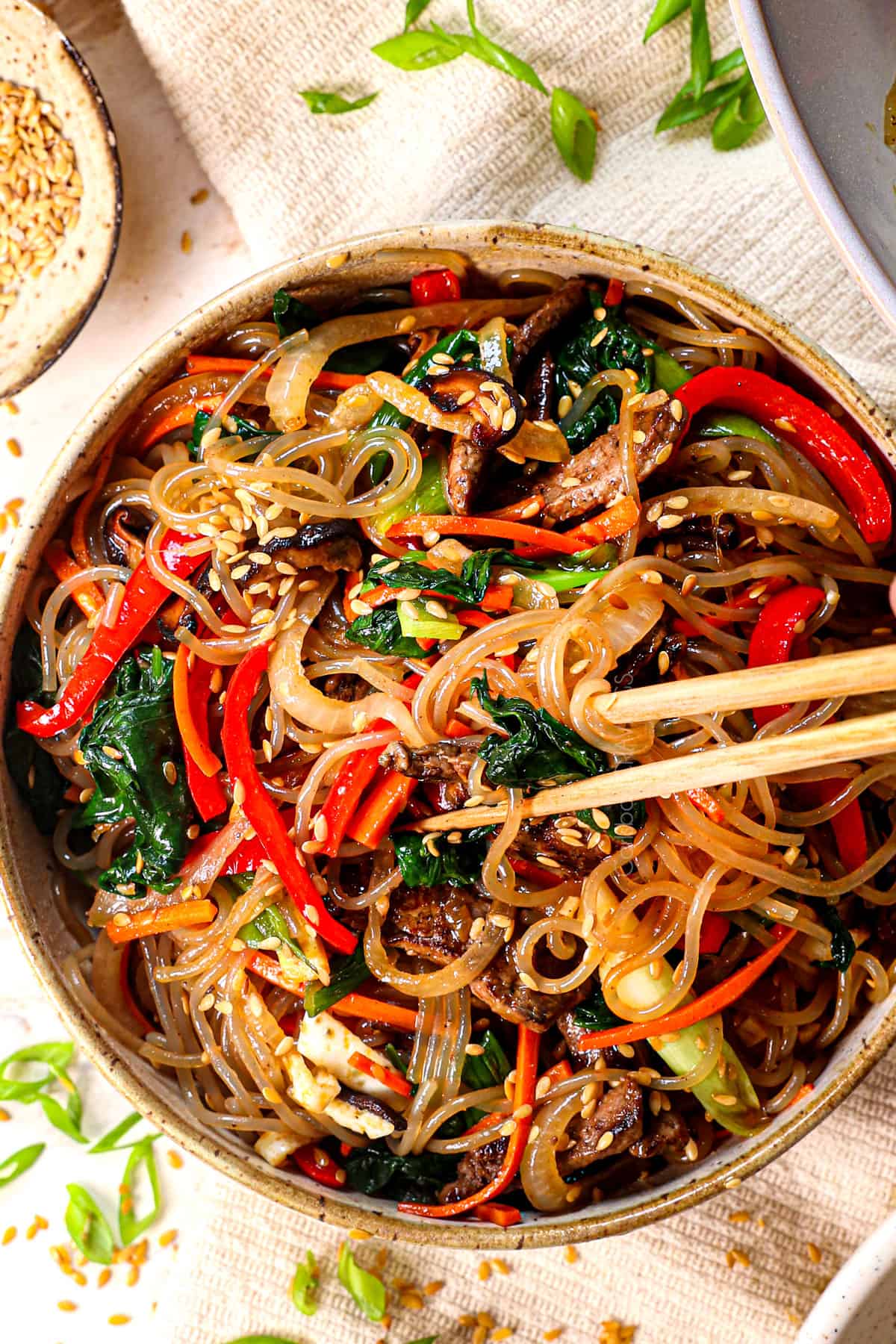
  • Garnish for presentation: For special occasions, reserve some of the thin omelet strips and toasted sesame seeds for topping, and add extra green onions for a pop of color.
  • Serve warm or at room temperature: Japchae is delicious either freshly sautรฉed and warm or slightly cooled to room temperature, which allows the flavors to meld. You can also serve it chilled, but thatโ€™s not my favorite.
  • As a main dish: With the filet mignon it makes a satisfying entrรฉe. You can even double the meat and marinade to make it more filling.
  • As a side dish: Serve alongside Korean grilled chicken, Korean fried chicken, Korean chicken wings, Korean BBQ burgers, grilled meats, or dumplings for a complete meal.
  • Family-style or individual plates: Traditionally served family-style in a large platter, but individual portions work well for meal prep or casual dinners.
japchae noodles in a bowl being eaten with chopsticks

Japchae Noodles FAQs

Is Japchae Gluten Free?

Japchae can be gluten-free, but it depends on the ingredients you use. Traditional Japchae uses soy sauce and gochujang, both of which often contain wheat, so to make it gluten-free, substitute with tamari or gluten-free soy sauce and a gluten-free gochujang or chili paste alternative. All other ingredientsโ€”sweet potato noodles, vegetables, and beefโ€”are naturally gluten-free.

Is Japchae Served Hot or Cold?

Japchae can be served either hot or at room temperature. Itโ€™s delicious fresh from the pan while warm, or slightly cooled to let the flavors meldโ€”making it versatile for family meals, potlucks, or meal prep.

Is Japchae a Healthy Dish?

Yes! Japchae is generally considered a healthy dish because itโ€™s loaded with nutrient-rich vegetables, lean protein, and fiber-filled sweet potato noodles. Itโ€™s lightly sautรฉed rather than fried, and the sauceโ€”when balancedโ€”adds flavor without heavy oils or excessive sugar. Plus, itโ€™s naturally gluten-free if made with tamari or gluten-free soy sauce.
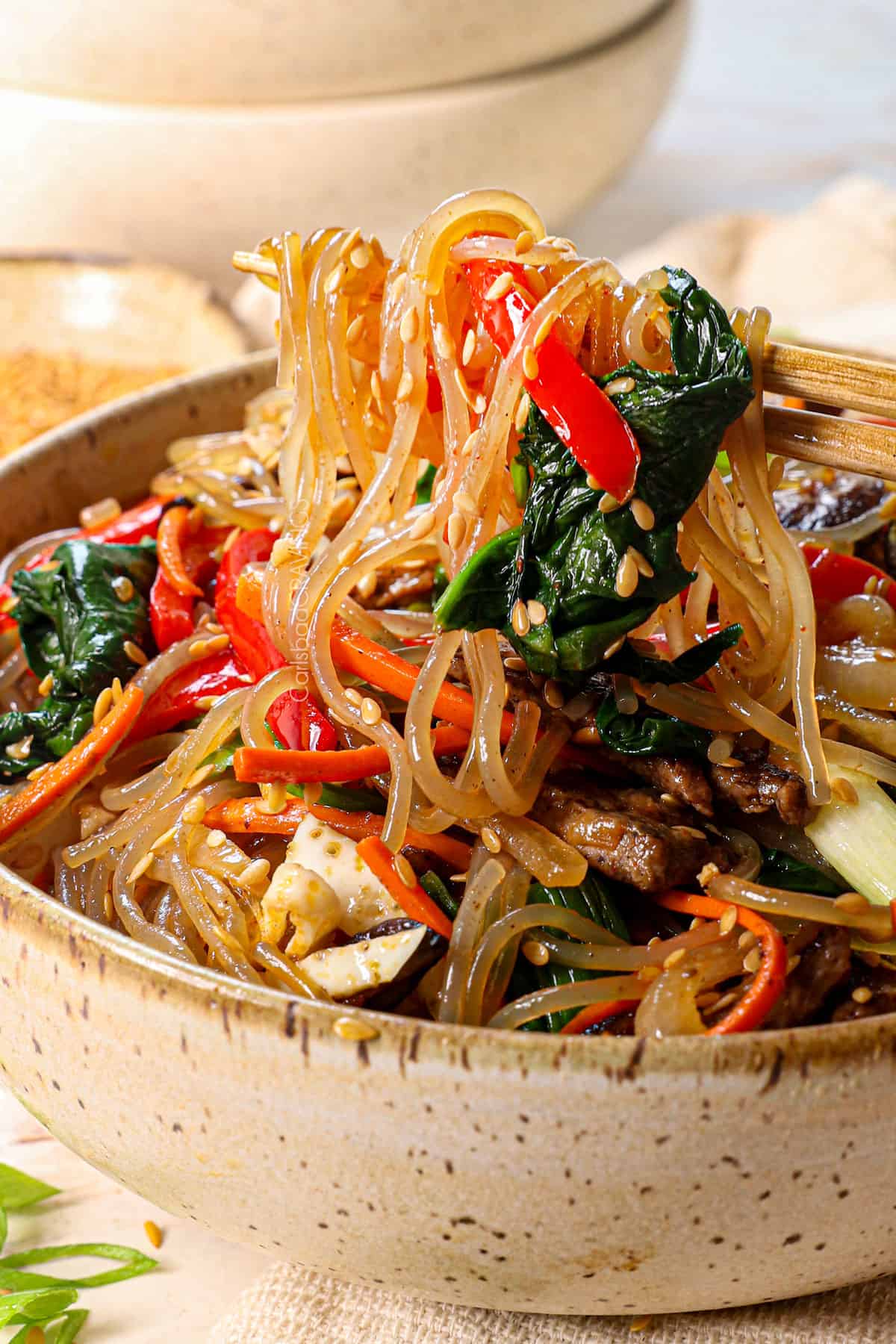
picking up noodles with chopsticks of the best japchae recipe

WANT TO TRY THIS japchae RECIPE?

PIN ITย to your recipe BOARD TO SAVE FOR LATER!

FIND ME ON PINTERESTย FOR MORE GREAT RECIPES!ย  I AM ALWAYS PINNING :)!

ยฉCarlsbad Cravingsย by CarlsbadCravings.com

Best Japchae Recipe

This authentic Japchae recipe is the best Korean glass noodle stir-fry youโ€™ll ever makeโ€”savory, sweet, and bursting with flavor in every bite! ย From details and techniques like marinating and caramelizing the mushrooms, to searing the beef for buttery tenderness, every step has been expertly tested and perfected to create restaurant-quality Japchae at home.ย  See the post for step-by-step photos and expert tips!
Servings: 4 servings
Total Time: 53 minutes
Prep Time: 35 minutes
Cook Time: 18 minutes

Save This Recipe To Your Recipe Box

You can now create an account on our site and save your favorite recipes all in one place!

Ingredients

BEEF MARINADE

NOODLE MARINADE

NOODLES AND STIR FRY VEGGIES

  • 7 oz. Korean sweet potato starch noodles (dangmyeon)
  • 3.5 oz. fresh shiitake mushrooms, brushed cleaned, stems removed, thinly sliced
  • Canola, vegetable oil, or other high-smoke point neutral oil
  • 1 egg, white and yolk separated
  • 1 medium yellow onion, thinly sliced
  • 3 green onion stems (3 whole green onions and all shoots), cut into 1 1/2โ€ณ lengths, white & green parts separated
  • Sea salt
  • 2 medium carrots, peeled & julienned into 1/8โ€ณ batons
  • 1 red bell pepper, julienned
  • 5 oz. baby spinach
  • 2 garlic cloves, minced
  • 2 tablespoons toasted sesame seeds

Instructions

  • Prep the water:ย Bring some water to a boil in a large pot for the noodles.ย  Meanwhile:
  • Marinate the Beef: Whisk the Beef Marinade ingredients together in a medium bowl. Stir in the beef and set aside until ready to use.
  • Marinate the Mushrooms: Whisk the Noodle Marinade ingredients together in a very large bowl โ€” large enough to toss the entire dish later. Transfer one tablespoon of this marinade to a small bowl and stir in the sliced mushrooms. Set aside until ready to use.
  • Boil the Noodles: Add the noodles to boiling water and cook for 5-7 minutes until they are soft, chewy, and slightly springyโ€”not mushy. Drain, then rinse in cold water to stop the cooking process. Cut the noodles with kitchen shears into 6-8-inch lengths. Transfer the noodles to the Noodle Marinade and toss to coat.ย 
  • Cook the Egg Separately: In a small bowl, beat the egg white with a fork. Heat 1 teaspoon of cooking oil in a large non-stick pan over medium-low heat, using a brush to spread it evenly. Pour in the egg white and cook until set, about 1-2 minutes. Transfer to a cutting board.ย  Repeat the process with the Egg Yolk.ย 
  • Cook the Onions: Heat 1 tablespoon of oil over medium-high heat. Cook the sliced onion, white parts of the green onions, and โ…› teaspoon of sea salt for 2-3 minutes, just until they begin to soften. Transfer the onions to the Noodle Bowl, but do not mix them in. We will add all the vegetables on top of the noodles, but only mix them in at the very end.
  • Cook the Carrot and Bell Pepper: Heat the empty pan with a drizzle of oil over medium-high heat. Add the carrot and bell pepper with โ…› teaspoon of sea salt and cook for 1 to 1 ยฝ minutes, until just starting to soften. Transfer to the Noodle Bowl, but donโ€™t mix in.
  • Cook the Spinach: Heat 1 teaspoon of oil over medium heat. Sautรฉ the green onions and 2 cloves of minced garlic for 30 seconds. Add the spinach, season with โ…› teaspoon of sea salt, and stir until just wilted, about 2โ€“3 minutes. Transfer to the Noodle Bowl, but donโ€™t mix it in.
  • Cook the Mushrooms: Heat 1 teaspoon of oil in the empty pan over medium-high heat. Add the mushrooms, spreading them evenly. Cook for about 1 minute per side, or until caramelized. Transfer to the Noodle Bowl, but do not mix in.
  • Cook the Beef: Heat 1 tablespoon of oil in the empty pan over medium-high heat. Once very hot, add the beef in a single layer and cook for about 45 seconds per side, or just until it is cooked through. Transfer to the Noodle Bowl, but donโ€™t mix it in.
  • Final Touches: Slice the egg white and egg yolk into matchsticks. ย Add them to the Noodle Bowl along with toasted sesame seeds. ย Toss to combine and serve!ย  (The dish is meant to be served warm or at room temperature, not piping hot.)

Video

Did You Make This Recipe?

Tag @CarlsbadCravings and Use #CarlsbadCravngs

Leave a Review, I Always Love Hearing From You!
Reader Interactions

leave a review

Your email address will not be published. Required fields are marked *