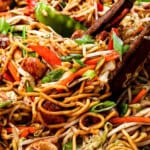
Homemade Lo Mein
This lo mein recipe rivals your favorite takeout spot and is easy to make at home with any veggies and any noodles (substitute with 5 cups packed veggies or cooked spaghetti). See the post for step-by-step photos, tips, and tricks that will make this lo mein recipe a staple in your home cooking repertoire!
Servings 4 servings
Ingredients
CHICKEN MARINADE
- 1 pound chicken thighs cut into bite-size pieces
- 1 tablespoon reduced sodium soy sauce
- 2 teaspoons cornstarch
- 1 teaspoon toasted sesame oil
- 1/8 teaspoon white pepper (may sub black)
- 2 tablespoons peanut or vegetable oil for cooking
Lo Mein Sauce
- 1/3 cup low-sodium chicken broth
- 2 tablespoons reduced sodium soy sauce
- 2 tablespoons dark soy sauce (may sub regular above)
- 3 tablespoons oyster sauce
- 1 1/2 tablespoons mirin/rice wine
- 1 tablespoon light brown sugar
- 2 tablespoons cornstarch
- 2 teaspoons toasted sesame seed oil
- 1-2 teaspoons Asian chili sauce (like sambal oelek or sriracha)
- 1/4 tsp EACH five spice powder, white pepper
STIR FRY (or use 5 cups packed veggies of choice)
- 16 ounces fresh lo mein noodles, Hokkien or other medium-thickness egg noodles (may sub dried, see notes)
- 1 1/2 tablespoons peanut or vegetable oil
- 3 green onions, white parts chopped into 1-inch pieces, green parts chopped 1/4-inch
- 2 cloves garlic, finely chopped (don’t mince or mash) (may sub ½ tsp ground in the sauce)
- 2 teaspoons freshly grated ginger (may sub 1/2 ground in the sauce)
- 1 red bell pepper, julienned
- 4 cups finely shredded green cabbage
- 2 carrots cut into matchsticks (3/4 cup)
- 2 ½ cups mung bean sprouts
- 1 cup snow peas, ends trimmed
Instructions
- Prepare chicken: Whisk together the Chicken Marinade ingredients in a medium bowl (soy sauce, sesame oil, cornstarch, pepper). Add chopped chicken and toss to coat evenly; set aside.
- Lo Mein Sauce: Mix the sauce ingredients together; set aside.
- Prepare noodles: For pre-cooked lo mein noodles, run them under hot tap water to separate, then drain well and toss with a drizzle of toasted sesame oil. For uncooked noodles, cook them in a large pot of boiling water until al dente, rinse with cold water, drain thoroughly, then toss with a drizzle of toasted sesame seed oil.
- Stir fry the chicken: Heat the oil in a large braiser, large stainless steel pan, or wok over medium-high heat. Sear the chicken until deeply golden on each side, then stir-fry until cooked through. Remove the chicken to a plate.
- Sauté aromatics: Heat another drizzle of oil in the pan. Add the WHITE parts of the green onions and sauté for 1 minute. Add the garlic and ginger, and stir fry for 10-15 seconds.
- Stir fry vegetables: Add the bell pepper, cabbage, and carrots and stir fry for 1 minute, adding another drizzle of oil if needed.
- Add noodles: Add the noodles and sauce, and stir fry for 1 minute by tossing the noodles with tongs.
- Add sprouts: Add the chicken, bean sprouts, snow peas, and the chopped tops of the green onions and toss to combine.
- Adjust to taste: Make it saltier with additional soy, spicier with chili sauce, sweeter with brown sugar, etc., until it’s perfect for YOU!
Video
Notes
Lo Mein Noodles
You have two options when purchasing lo mein noodles: FRESH: This is the best option, with a slippery, chewy texture that readily absorbs the sauce. These are pre-cooked and are added directly to the pan.- They are located in the refrigerated section (sometimes the freezer, thaw first) of many grocery stores, usually near tofu, wonton wrappers, etc.
- Look for labels like “fresh lo mein noodles,” “stir-fry noodles,” or “Chinese egg noodles.” Bands like Twin Marquis or Ka-Me in the refrigerated section are reliable options
- Lo Mein Substitute: If you can’t find something labeled “lo mein,” the next best thing is fresh yakisoba noodles, chow mein noodles, or Chinese-style egg noodles—they’re often interchangeable for home cooking. Alternatively, use any noodle! Since the noodles are cooked before being added to the pan, any thickness or type of noodle will work—even spaghetti is a great option!
- Green onions: One green onion is considered the entire bunch, including all the shoots. The bottom white part and top green part will be added to the lo mein at different times.
- Rice wine: This adds a complex sweetness and depth of flavor. I use “Kikkoman Aji-Mirin: Sweet Cooking Rice Seasoning” which is commonly found in the Asian section of most grocery stores or you can Amazon it. The best substitute for rice wine is pale dry sherry. Do NOT substitute rice wine with rice vinegar, they are NOT the same. Rice vinegar will add an acidic bite without the sweetness.
Prep Ahead
- Noodles: If using dried noodles, they can be boiled, rinsed, and drained, and tossed with a drizzle of toasted sesame oil. Store in an airtight container or plastic bag in the refrigerator for up to three days.
- Sauce: Whisk the sauce ingredients together and store in an airtight container in the refrigerator for up to 5 days.
- Veggies and aromatics: Chop and store in separate airtight containers in the refrigerator for up to 2 days